

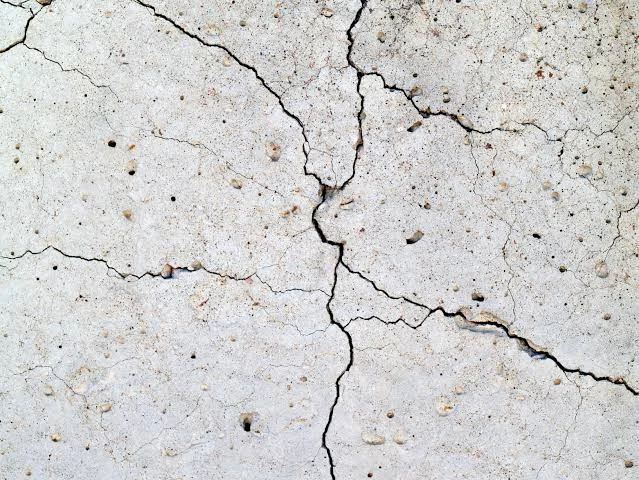
Most of the time, no — and the reason is simpler than you would expect. A cracked driveway, a heaved patio or a sunken garage pad in Calgary is almost always the result of frost, time and water, and home insurance is built to pay for sudden, accidental events, not for things that happen slowly. The Insurance Bureau of Canada puts it about as plainly as it can be put: “A home insurance policy is not a maintenance contract.”
But “most of the time” is not “always,” and the exceptions are worth knowing before you either file a claim that gets denied or skip one that would have been paid. Here is how it actually works, in plain language, for a Calgary homeowner.
The rule behind the rule: insurance pays for events, not for aging
Your home policy lists the things it will pay for. Those listed things are called perils — an insurance word that just means “the event that caused the damage.” The Insurance Bureau of Canada lists the standard set as: aircraft or vehicle impact, electrical current, explosion, falling object, fire, lightning, riot, smoke, theft, transportation, vandalism, water damage, wind and hail, and window breakage.
Look at that list and then look at your driveway. Nothing on it says “twenty-two Calgary winters.” That is the whole answer in one sentence.
The Bureau spells out the reasoning with a different example: “the gradual deterioration of shingle roofing or the rotting of wooden fencing is natural and expected, and therefore, not an insured peril.” Concrete sits in exactly the same category. In our climate, the freeze-thaw cycle is not an accident — it is Tuesday. An insurer treats predictable wear as the homeowner’s cost, the same way it treats a worn-out roof.
So the test is not “is my concrete damaged?” It is “did something on the list do it, and did it happen suddenly?”
When a Calgary home policy usually does pay
There is a real set of situations where concrete damage is claimable, and they all share the same shape: a listed event happened on a specific day, and the slab was collateral damage.
| Situation | Usually claimable? | Why |
|---|---|---|
| A delivery truck or a vehicle cracks your driveway backing in | Often yes | Vehicle impact is a listed peril |
| A tree comes down in a windstorm and breaks your patio | Often yes | Falling object and wind are listed perils |
| A house fire damages the garage slab and steps | Usually yes | Fire is a listed peril |
| Someone deliberately drives across or damages your walkway | Often yes | Vandalism is a listed peril |
| Hail or a windstorm damages a structure that sits on the slab | Sometimes | Depends on what was damaged and the policy wording |
| Hairline cracks appearing over several winters | No | Gradual, expected deterioration |
| Frost heave lifting a walkway a little more each spring | No | Gradual, and driven by ground movement |
| Surface flaking and pitting after years of road salt | No | Wear, and usually maintenance-related |
| A slab settling because the ground under it compacted | Almost never | Earth movement and settling are commonly excluded |
That last row deserves its own note, because it is the one that surprises people most. A great deal of Calgary concrete damage is really ground damage — clay that shrinks in a dry summer, backfill that keeps settling for years, frost pushing from below. Movement of the ground is very commonly excluded from a standard home policy, and when it is, the concrete sitting on that ground is excluded with it.
One more category worth separating out: if your concrete was poured badly a year ago and is already failing, that is not an insurance question at all. That is a workmanship question, and it belongs with the contractor who poured it and whatever warranty came with the job. Insurance and warranty are two different pieces of paper that do two different things.
Where concrete and insurance really do collide: water
Here is the part most homeowners miss. Your driveway and your patio rarely get you a payout on their own — but they can absolutely decide whether a basement claim goes your way.
Concrete around a house is a drainage device whether you think of it that way or not. A slab that has heaved or settled so that it now slopes toward the house is pushing every spring melt and every summer downpour at your foundation wall. That is how a $400 concrete problem turns into a five-figure water problem.
Two things to know about water coverage:
- Overland flooding — water from rivers or other fresh water overflowing onto dry land — “is typically not covered by a standard policy,” per the Insurance Bureau of Canada. Optional overland flood coverage is now offered by many insurers, priced by risk.
- Sewer backup — “damage caused by the backing up of sewers and drains is typically not covered by a standard policy.” Optional sewer backup coverage is offered by most insurers, and in a city with Calgary’s storm history it is worth asking about by name.
The Bureau’s own prevention advice points straight back at concrete and grading: ensure “proper lot grading. if possible, build up the ground around your house so that water will drain away from basement walls,” and make sure downspouts “extend at least six feet from your basement wall and drain water away from your home and neighbouring properties.”
If a downspout is dumping onto a slab that slopes the wrong way, you have both problems at once. Fixing the slope is a concrete job. Doing it before the claim is cheaper than doing it after.
If you are going to claim, do it properly
Say something on the list genuinely did happen — a vehicle cracked the pad, or a tree came through the patio. The Insurance Bureau of Canada’s process is straightforward:
- Document everything first. Photograph the damage before anything is cleaned up or moved. Make a complete list of what was damaged.
- Report it as soon as possible. You are expected to contact your insurance representative promptly after the loss, not weeks later once you have shopped for quotes.
- File the proof of loss form. This typically has to be completed and returned to your insurance company within 30 days.
- Keep every receipt related to cleanup and temporary repairs.
Two more pieces of vocabulary that decide how much you actually see:
- Deductible — “an agreed specified amount that the insured must pay on a claim before the insurance company will cover the rest.” If your deductible is $1,000 and the driveway repair is $1,400, you are claiming $400 and putting a claim on your record to do it. Often not worth it.
- Actual cash value vs. replacement cost. Actual cash value is the fair market value of the property, which for a twenty-year-old driveway is a lot less than what a new one costs. Replacement cost coverage provides a substitute for the damaged property without that depreciation deducted. Which one your policy carries makes a very large difference on an old slab.
If you are unsure what your own wording says, the Bureau runs a Consumer Information Centre at 1-844-227-5422. Your broker can also tell you in five minutes — and that call is free, which is more than can be said for a denied claim.
What to do when it isn’t covered — which is most of the time
Here is the practical Calgary reality: for the large majority of cracked, flaking and heaving concrete around a house here, insurance is not the path. Maintenance and repair are. And the good news is that the cost of staying ahead of it is nowhere near the cost of replacement.
- Know which cracks matter. Not every crack is a problem, and not every crack is the same kind of problem. Our guide to foundation cracks and when to worry walks through what you are looking at.
- Catch surface flaking early. Once the top layer starts coming off, water gets in faster each winter. There is a step-by-step approach in our spalling repair guide for homeowners.
- Handle winter deliberately. Most of the damage that insurers call “wear” is really salt and meltwater. Our winter concrete maintenance page covers what to use and what to keep off the slab.
- Seal it, correctly. A sealer is the cheapest insurance you can actually buy for concrete, and the type matters in our climate — see choosing a sealer for Calgary conditions.
And if the slope is already wrong, fix the slope. A driveway or walkway that sends water at the house is the one concrete defect that reliably turns into a bigger bill somewhere else.
Frequently asked questions
Does home insurance cover a cracked driveway in Calgary? Usually not. Cracking from frost, ground movement and age is treated as gradual wear, which is not an insured peril. It may be covered if a listed event — a vehicle, a falling tree, fire, vandalism — caused it.
Is foundation repair covered by home insurance? Generally not when the cause is settling or ground movement, which are commonly excluded. Damage from a covered event, such as an explosion or a vehicle impact, is a different matter. Your policy wording decides.
Is frost heave covered? No, in the normal case. Frost heave is ground movement and is both gradual and expected in our climate.
What about water getting into my basement past a bad slab? That is a water claim, not a concrete claim, and the answer depends on the water’s route. Overland flooding and sewer backup are typically excluded from a standard policy and offered as optional coverages instead.
Should I claim a small concrete repair? Compare the repair cost to your deductible first. If the repair is close to or below the deductible, claiming costs you money and a claims-history entry for nothing.
How long do I have to file? Report the loss to your insurer as soon as possible; the proof of loss form typically has to be back with them within 30 days.
Get an honest answer on your slab
If you are trying to work out whether what you are looking at is an insurance question, a repair question or something you can safely leave for another season, we will tell you straight. We are a division of Omega 2000, we have looked at a lot of Calgary concrete, and we would rather talk you out of unnecessary work than sell it to you.
Book a look at your driveway, patio or garage pad through our concrete repair page, and we will give you a plain assessment and a real number.
This article explains general insurance concepts and is not insurance advice. Your own policy wording, endorsements and insurer decide what is covered — check with your broker or insurer.